Jinjiang Anhai Liancheng Machinery Co., Ltd.

News

Does a CNC Machined Forged Alloy Steel Excavator Sprocket with 50 55 HRC Hardness Really Protect the Track Chain from Premature Pitch Elongation
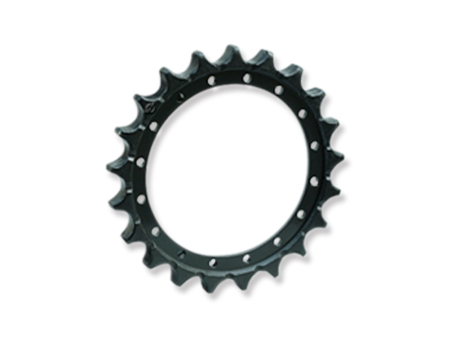
In quarrying, open-pit mining, and heavy foundation excavation, the undercarriage routinely accounts for more than half of a machine's total maintenance spend. Among all undercarriage components, the drive sprocket (also called drive wheel) is the first to show wear — and if allowed to run past its service limit, a hooked tooth profile forces the track chain to climb, dramatically accelerating bushing-pitch elongation and shortening roller life. The Sprocket for SDLGE665F — Forged Alloy Steel Ex
Does a CNC Machined Forged Alloy Steel Excavator Sprocket with 50 55 HRC Hardness Really Protect the Track Chain from Premature Pitch Elongation
06 07,2026
Will Replacing a Worn Cast Sprocket with a Forged Alloy Steel Excavator Drive Wheel Really Prevent Track Chain Stretch and Reduce Undercarriage Downtime
In quarry, mining, and heavy earthmoving operations, the undercarriage accounts for 50–70 % of a machine's total life-cycle cost. The most overlooked trigger of premature undercarriage expense is running a worn drive sprocket (drive wheel) with a still-serviceable track chain. As sprocket teeth erode into a hooked profile, the chain bushing climbs the tooth tip — accelerating pitch elongation, causing track slippage, and eventually requiring simultaneous replacement of both chain androllers. The
Will Replacing a Worn Cast Sprocket with a Forged Alloy Steel Excavator Drive Wheel Really Prevent Track Chain Stretch and Reduce Undercarriage Downtime
06 07,2026
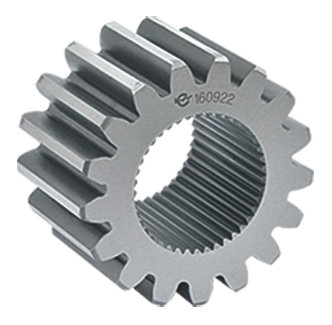
Is a CNC-Broached 50-Spline Gear the Missing Link in Your Loader's Power Transmission Reliability?
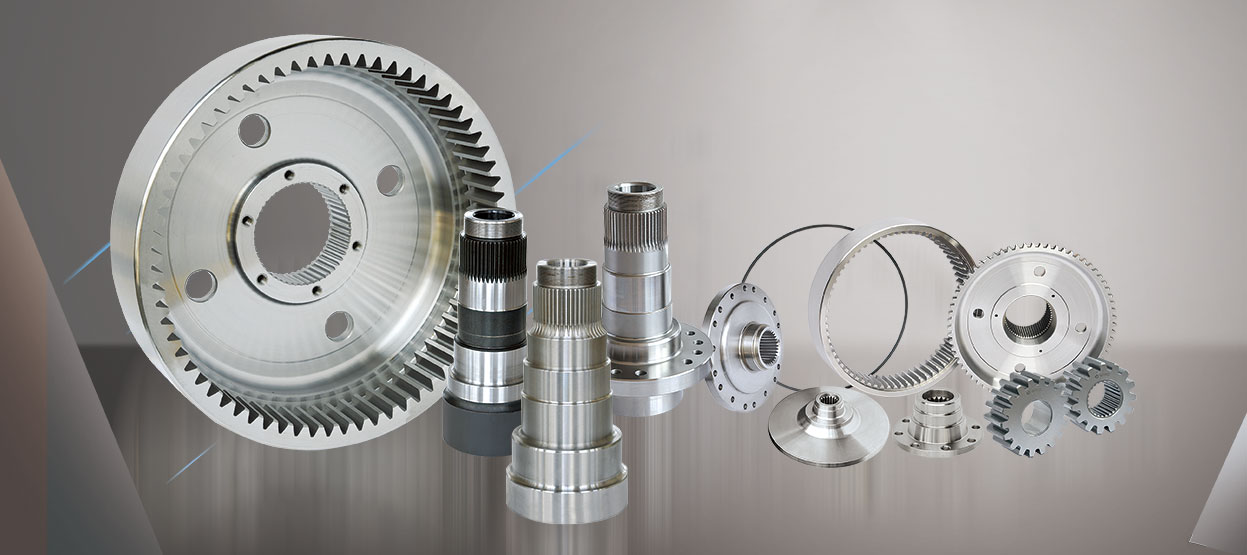
Forged from alloy steel, CNC-broached to precise spline geometry, and quenched & tempered for a hardened case with a tough core, it is engineered as a direct interchange replacement that restores full torque transfer reliability. But what specific manufacturing attributes separate a gear that "fits" from one that delivers years of trouble-free service in quarry and construction conditions?
Is a CNC-Broached 50-Spline Gear the Missing Link in Your Loader's Power Transmission Reliability?
11 06,2026
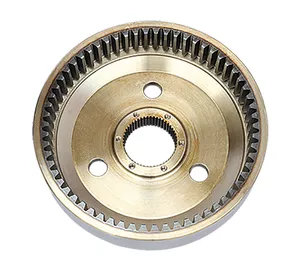
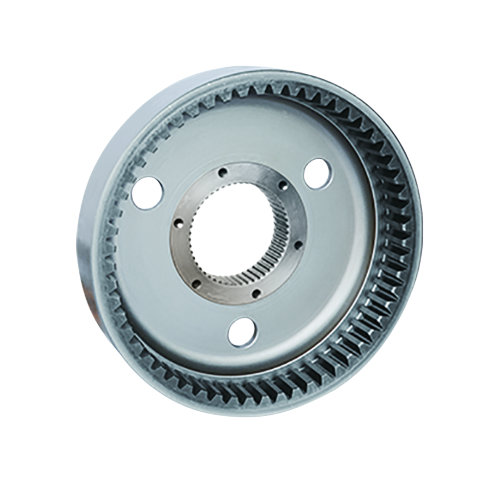
Is a QT-Treated 62-Tooth Gear the Key to Longer Final Drive Life in Liugong 50 Loaders?
The 62-Tooth Gear for Liugong Model 50 Loader with Quenching & Tempering (QT) Treatment​ is purpose-engineered to resist exactly these failure modes. Forged from alloy steel, CNC-precision machined, and QT-processed to achieve a tough core with a hardened working surface, this gear is built to absorb impact and resist wear in demanding quarry, mine, and yard applications. Below we explain why the QT process and forged construction matter, and what to verify when sourcing replacement or OEM final
Is a QT-Treated 62-Tooth Gear the Key to Longer Final Drive Life in Liugong 50 Loaders?
11 06,2026
Common Causes of Gear Tooth Failure in Loaders and Excavators
Gear systems are critical components in loaders and excavators, especially within planetary gearboxes and final drive assemblies. When a single gear tooth fails, it can lead to abnormal noise, reduced efficiency, or even complete machine shutdown. For equipment owners, maintenance teams, and parts buyers, understanding why gear tooth failure happens is the first step toward preventing costly downtime.So, what actually causes gear teeth to fail in heavy equipment? Let’s break it down in a clear,
Common Causes of Gear Tooth Failure in Loaders and Excavators
24 12,2025
Forging Tonnage Explained: Why Press Capacity Matters in Gear Quality
When buyers search for high-quality gears for excavators, loaders, or other heavy equipment, they often focus on material grade, heat treatment, or tooth accuracy. However, one critical factor is frequently overlooked: forging tonnage.In simple terms, forging press capacity plays a key role in determining gear strength, durability, and long-term performance.So why does forging tonnage matter so much, and how does it affect gear quality in real-world applications? Let’s break it down step by step

Forging Tonnage Explained: Why Press Capacity Matters in Gear Quality
24 12,2025
Forged vs Cast Gears: Which Manufacturing Process Is Better for Heavy Equipment?
When selecting gears for heavy equipment such as excavators, loaders, and other construction machinery, buyers often focus on tooth count, model compatibility, or price. However, one of the most critical—but frequently overlooked—factors is how the gear is manufactured.Forged gears and cast gears may look similar on the surface, but their internal structure, performance, and service life can be very different. Understanding these differences helps buyers make smarter decisions, especially when g
Forged vs Cast Gears: Which Manufacturing Process Is Better for Heavy Equipment?
17 12,2025
How Gear Heat Treatment Technology Directly Impacts Excavator and Loader Performance
In heavy equipment such as excavators and wheel loaders, gears are not just transmission components—they are load-bearing parts that directly influence machine stability, efficiency, and service life. While many buyers focus on gear size or tooth count, heat treatment technology often plays a more critical role in real-world performance.In this technical breakdown, we’ll explore how different heat treatment processes affect gear behavior, why quenching and tempering (QT) is widely used, and what
How Gear Heat Treatment Technology Directly Impacts Excavator and Loader Performance
17 12,2025
How Casting Technology Upgrades Are Changing the Quality of Final Drive Gears
Introduction: Casting Technology Is Not What It Used to BeIf you’re involved in machinery maintenance or parts sourcing, you already know how important final drive gears are. They transfer power, handle shock loads, and keep excavators and loaders running smoothly even under tough working conditions.But here’s the big point: casting technology has changed — and these upgrades are transforming gear quality in ways that benefit buyers more than ever.1. Precision Casting Improves Dimensional A
How Casting Technology Upgrades Are Changing the Quality of Final Drive Gears
10 12,2025
Why the Global Supply Chain Is Shifting Toward China Manufacturers for Heavy Equipment Parts
Introduction: A Global Shift You Can’t IgnoreOver the past decade, the global supply chain for heavy equipment parts—especially loader parts, excavator supporting products, gears, track rollers, idlers, and final drive components—has been undergoing a major transformation. Buyers around the world are increasingly turning to China manufacturers for stable supply, consistent quality, and better cost performance. And honestly, it’s not surprising at all.But why exactly is this shift happening,
Why the Global Supply Chain Is Shifting Toward China Manufacturers for Heavy Equipment Parts
10 12,2025